

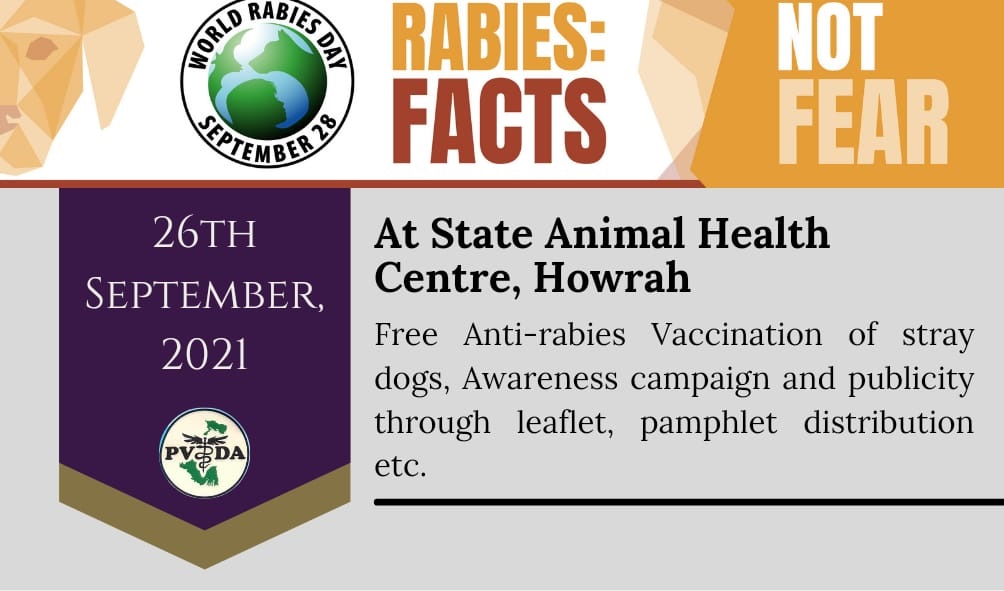
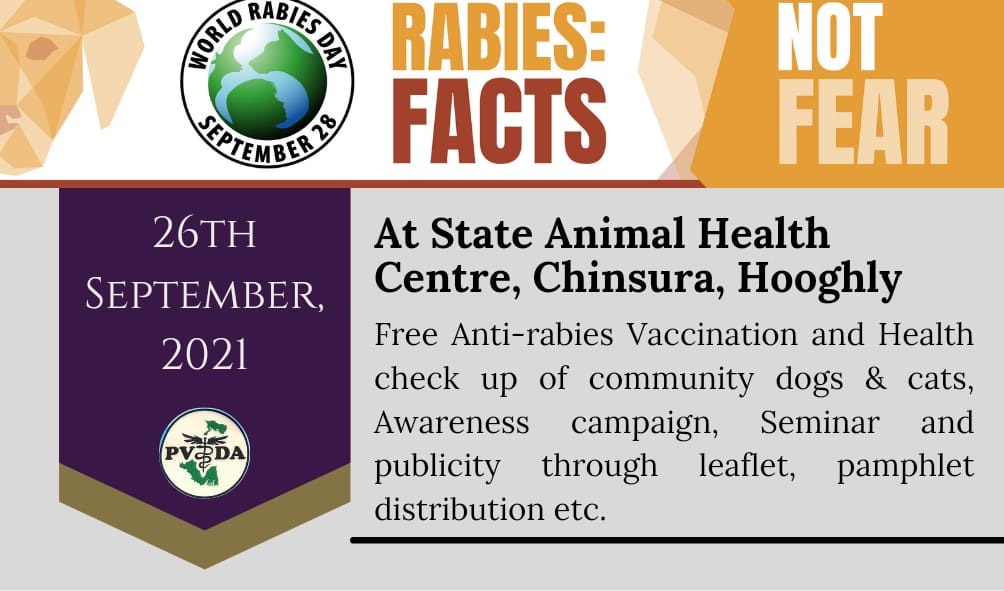
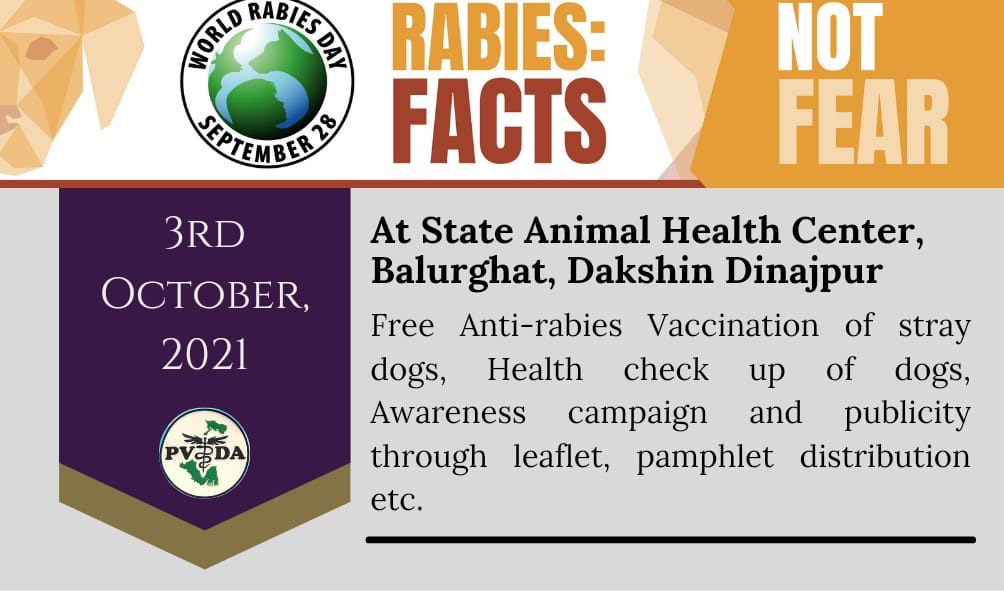
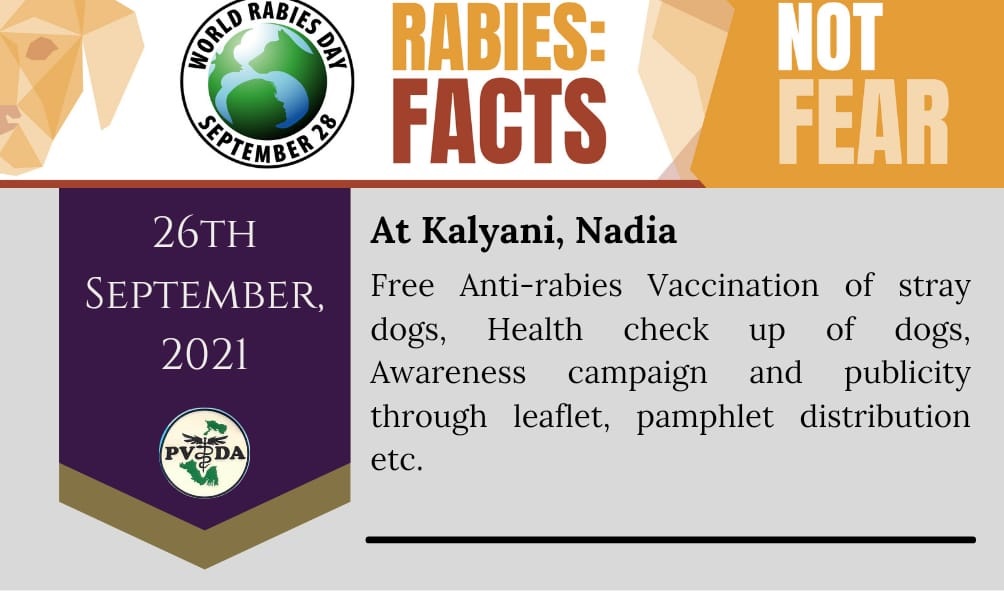
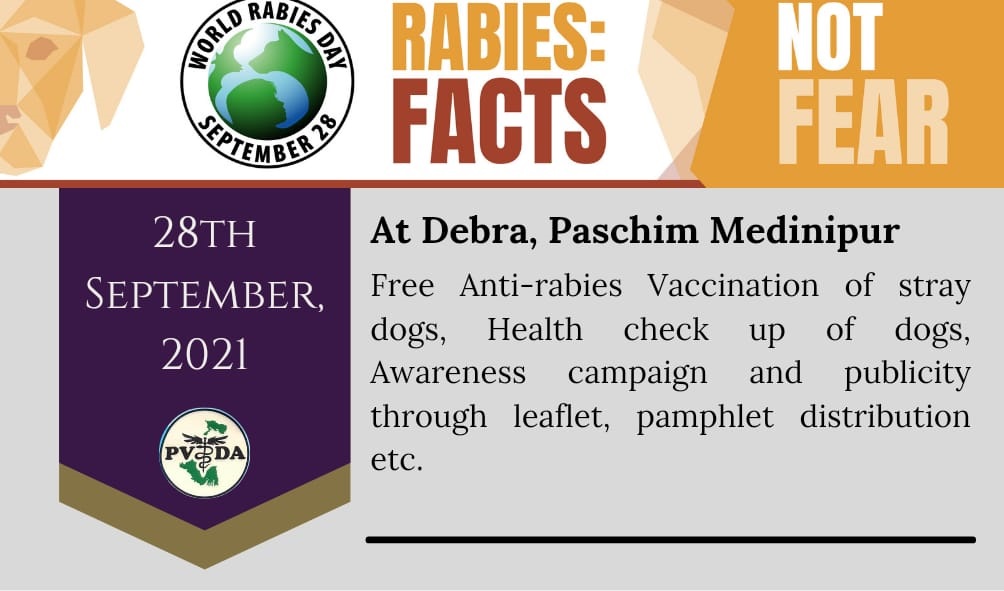
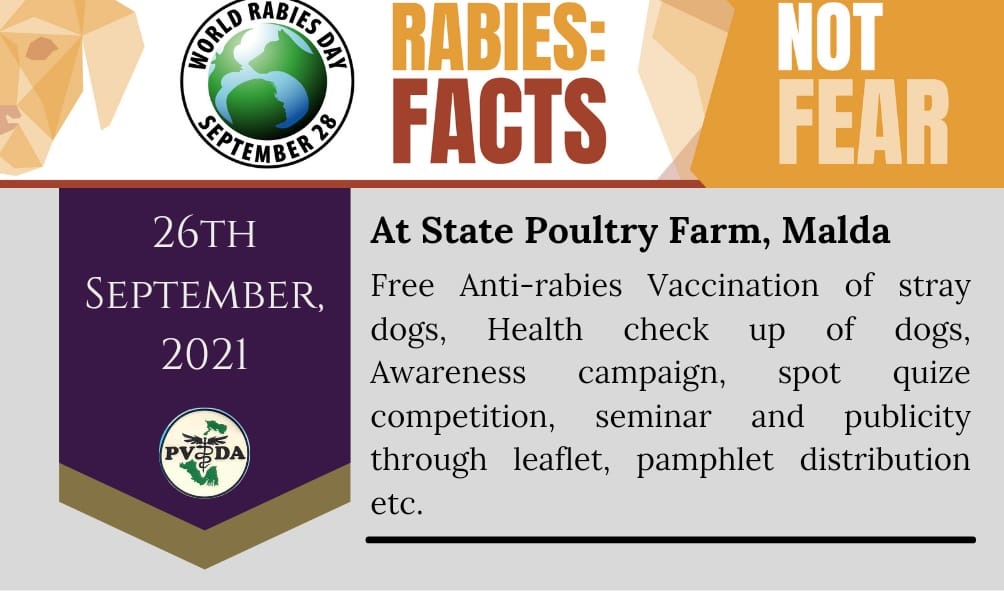
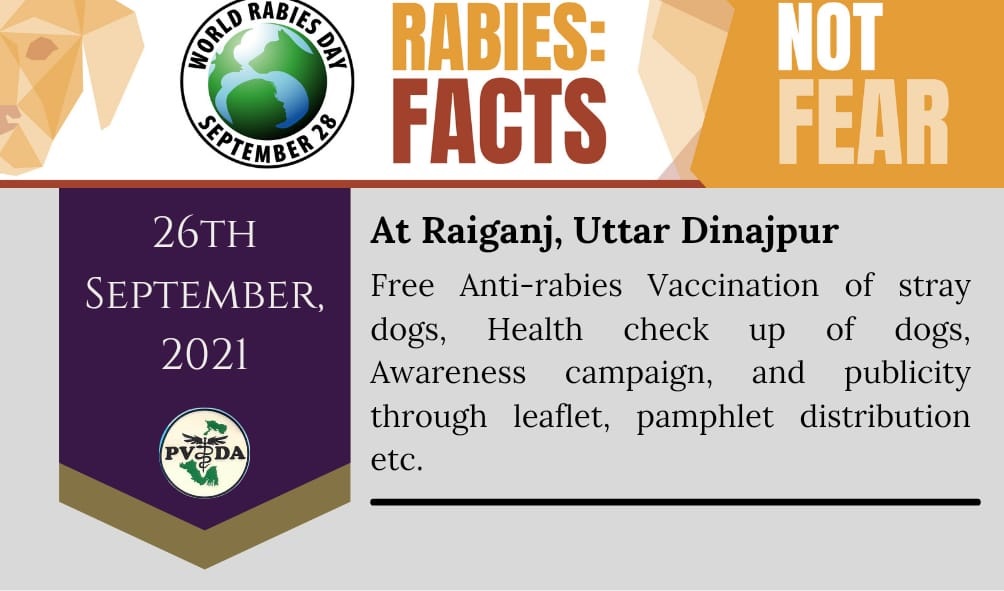
On the occasion of 15th World Rabies Day, Progressive Veterinary Doctors'Association, an organisation of Veterinary Professionals in West Bengal, India, is going to organise a series of events in several districts of West Bengal, India from 25th September 2021 to 28th September, 2021 by the way of free Anti-rabies Vaccination to community dogs and cats, awareness campaign about the impact of rabies on humans and animals, seminar, distribution of leaflet/ pamphlet etc.
|
World Rabies Day is an international campaign which is observed on September 28 every year. Rabies remains a major concern worldwide, killing nearly 60,000 people every year globally and in India, about 20,000 people die of rabies annually. Children account for 40% of the rabies death every year. Every single death is preventable. 99% of rabies cases begin with a bite from an infected rabid animal. However, inexpensive canine vaccination can stop rabies in its tracks. World Rabies Day aims to raise awareness about the impact of rabies on humans and animals, provide information and advice on how to prevent the disease, and how individuals and organizations can help eliminate the main global sources. Know the facts about rabies: What is rabies? Rabies is a vaccine-preventable, zoonotic viral disease characterized by inflammation of the brain in human and other mammals caused by neurotropic RNA virus under Lyssavirus genus under Rhabdoviridae family and transmitted through bite of infected animals. Who can get infected by rabies? All warm blooded animals including humans, may become infected with the rabies virus and develop symptoms. The virus has also adapted to grow in cells of cold-blooded vertebrates. Worldwide, about 99% of human rabies cases come from domestic dogs. Other common animals that can get infected and transmit rabies are bats, monkeys, raccoons, foxes, shunks, cattle, wolves, cats and mongooses. Rabies is estimated to cause 59 000 human deaths annually in over 150 countries, with 95% of cases occurring in Africa and Asia. Signs? Incubation period of rabies varies from 4 days to longer than six years, depending on the location and severity of the wound and the amount of virus introduced. Initial symptoms of rabies include a fever with pain and unusual or unexplained tingling, pricking, or burning sensation (paraesthesia) at the wound site. As the virus spreads to the central nervous system, progressive and fatal inflammation of the brain and spinal cord develops. There are two forms of the disease: a) Furious form: Furious form of rabies is characterized by hyperactivity, excitable behaviour, hydrophobia (fear of water) and sometimes aerophobia. Death occurs after a few days due to cardio-respiratory arrest. Saliva production is greatly increased, and attempts to drink, or even the intention or suggestion of drinking, may cause excruciatingly painful spasms of the muscles in the throat and larynx. Since the infected individual cannot swallow saliva and water, the virus has a much higher chance of being transmitted, since it multiplies and accumulates in the salivary glands and is transmitted through biting.[22] Hydrophobia is commonly associated with furious rabies, which affects 80% of rabies-infected people. b) Dumb form: Dumb form of rabies is characterized by progressive paralysis. This form of rabies runs a less dramatic and usually longer course than the furious form. Muscles gradually become paralysed, starting at the site of the bite or scratch. The throat and masseter muscles become paralyzed; the animal may be unable to swallow and it can salivate profusely. There may be facial paralysis or the lower jaw may drop. A coma slowly develops, and eventually death occurs. Risk to human Rabies is virtually 100% fatal in human. The route of infection to human is usually by a bite or scratches of a rabid animal. The virus is usually present in the nerves and saliva of a symptomatic rabid animal. After a typical human infection by bite, the virus enters the peripheral nervous system. It then travels retrograde along the efferent nerves toward the central nervous system. During this phase, the virus cannot be easily detected within the host, and vaccination may still confer cell-mediated immunity to prevent symptomatic rabies. When the virus reaches the brain, it rapidly causes encephalitis, the prodromal phase, which is the beginning of the symptoms. Once the patient becomes symptomatic, treatment is almost never effective and mortality is over 99%. Rabies may also inflame the spinal cord, producing transverse myelitis.
Other risk factor includes:
The following individuals may have a higher risk of contracting rabies than the general population:
Prevention of rabies (Includes what can you do to control rabies and what to do in case of dog bite)
Although rabies is 100 percent fatal, at the same time it is 100 percent vaccine preventable..
Pre exposure prophylaxis a. Eliminating rabies in dogsVaccinating dogs is the most cost-effective strategy for preventing rabies in people. Dog vaccination reduces deaths attributable to dog-mediated rabies and the need for PEP as a part of dog bite patient care. Vaccination schedule for dog: Rabies 1-year: Administered in 1 ml dose I/M, as early as 3 months of age. Annual boosters are required. Rabies 3-year: Administered 1 ml dose I/M, as early as 3 months of age. A second vaccination is recommended after 1 year, then boosters every 3 years. b. Awareness on rabies and preventing dog bitesIncreasing awareness of rabies prevention and control in communities includes education and information on responsible pet ownership, how to prevent dog bites, and immediate care measures after a bite.c. Immunization of peoplePre-exposure immunization is recommended for people in certain high-risk occupations such as veterinarians, laboratory workers handling live rabies and rabies-related viruses, animal disease control staff, and wildlife rangers.Pre-exposure immunization might be indicated also for outdoor travellers to and expatriates living in remote areas with a high rabies exposure risk and limited local access to rabies biologics. Finally, immunization should also be considered for children living in, or visiting such areas. As they play with animals, they may receive more severe bites, or may not report bites. Pre-exposure vaccination is administered as one full dose of vaccine intramuscularly or 0.1 ml intra-dermally on days 0, 7 and either day 21 or 28.
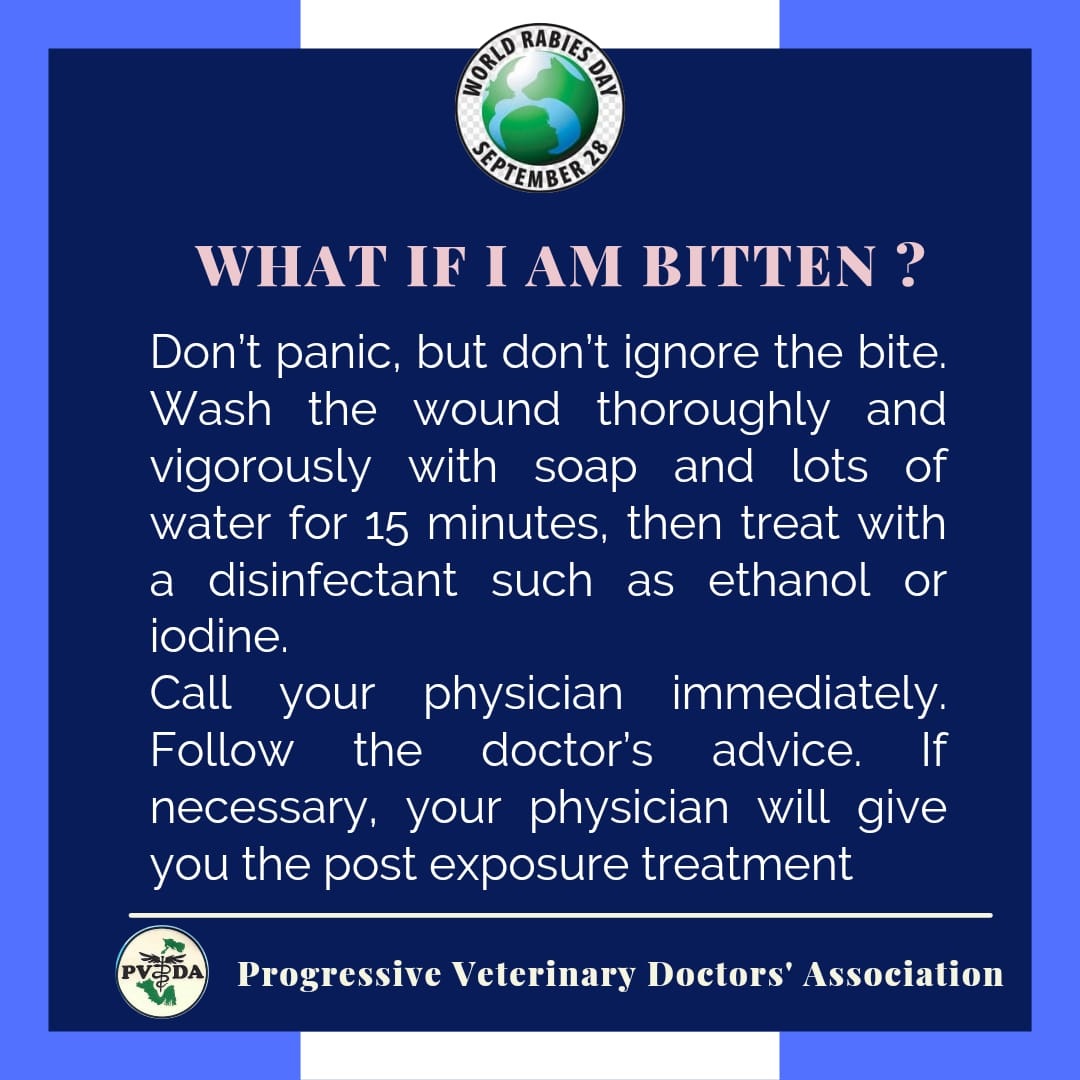
Post exposure prophylaxis (PEP): 1. Wounds must be immediately washed/flushed for 15 minutes and disinfected with detergent, ethanol (700ml/l), iodine (tincture or aqueous solution) or other substances that remove and kill the rabies virus. 2. Rabies PEP should be instituted immediately. PEP consists of a course of potent, safe and effective rabies vaccine that meets WHO recommendations and administration of rabies immunoglobulin if required. 3. PEP does not have contraindications if purified rabies immunoglobulin and vaccine are used. Pregnancy and infancy are not contraindications to PEP. Starting the treatment soon after an exposure to rabies virus can effectively prevent the onset of symptoms and death. Vaccines for Post exposure prophylaxis 1. Cell Culture Vaccines: a. Human Diploid Cell Vaccine (HDCV), 1 ml b. Purified Chick Embryo Cell Vaccine (PCECV), 1ml c. Purified Vero Cell Rabies Vaccine (PVRV), 0.5 ml and 1ml
2. Purified Duck Embryo Vaccine (PDEV), 1ml
Post-bite vaccination for human and animals Essen regimen (1-1-1-1-1): Five dose intramuscular schedule - The course for post-exposure prophylaxis consists of intramuscular administration of five injections, one dose each given on days 0, 3, 7, 14 and 28. Day 0 indicates date of administration of first dose of vaccine. Sixth dose at day 90 is optional. Rabies Immunoglobulin (RIG): Provides passive immunity in the form of ready-made anti-rabies antibodies. Two types of RIG are available: a. Equine Rabies Immunoglobulin (ERIG) - Dose of ERIG is 40 IU per kg body weight b. Human Rabies Immunoglobulin (HRIG) - Dose of the HRIG is 20 IU per kg body weight
As much of the calculated dose of RIG as is anatomically feasible should be infiltrated into and around the wound/s. After all the wound(s) has been infiltrated, if any volume of RIG is remaining, it should be administered by deep intramuscular injection at a site distant from the vaccine injection site.
Exposure risk and indications for PEP Depending on the severity of the contact with the suspected rabid animal, administration of a full PEP course is recommended as follows: Categories of contact and recommended post-exposure prophylaxis (PEP)
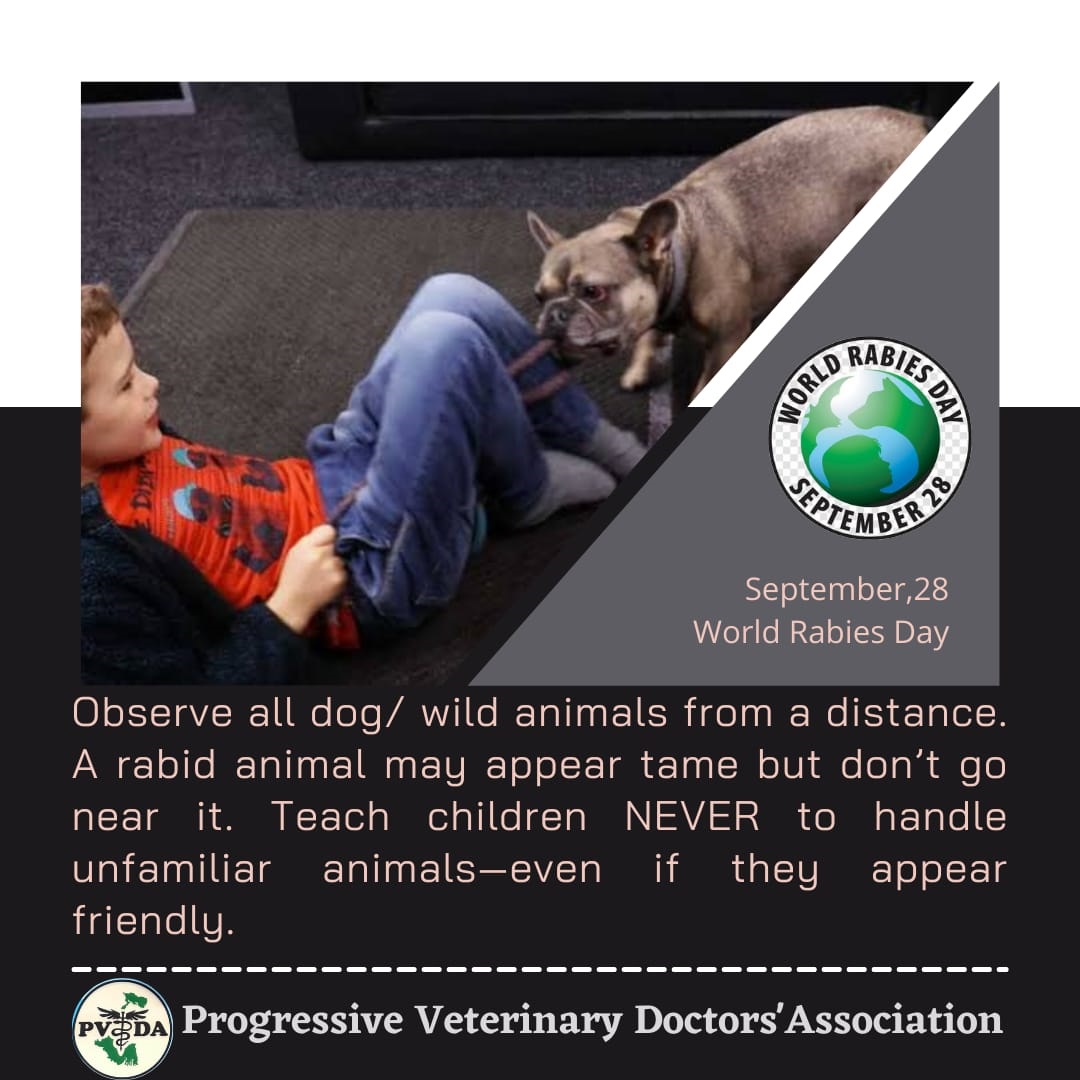
All category II and III exposures assessed as carrying a risk of developing rabies require PEP How to behave with Dog?
|




Events

|
|
|
|
|
|
|
|